St. Louis homeowner guide
What size gutter does a St. Louis roof need?
By Gutter Installation St. Louis, a referral service. Updated November 3, 2026.
Many smaller St. Louis roofs manage with 5-inch K-style gutters. Large or steep roof sections, long runs and valleys that dump into one corner are better served by 6-inch gutters with bigger downspouts. Lambert averages 11 days a year with an inch or more of precipitation, so ask a contractor to size from your roof areas and pitch, not by habit.
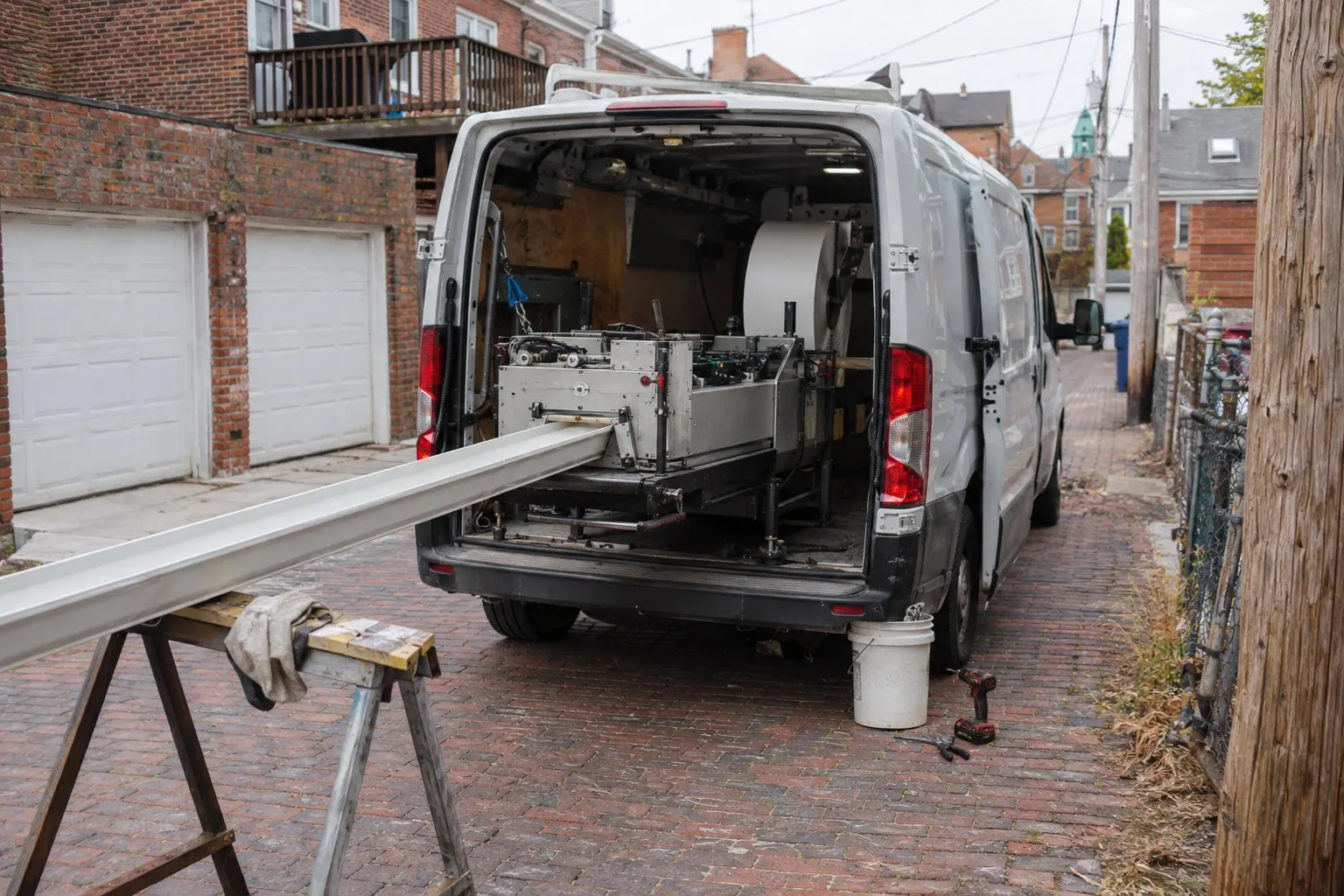
- One inch of rain on 1,000 square feet of roof is about 623 gallons.
- Roof area and pitch decide size, and valleys concentrate flow.
- Downspouts are often the real bottleneck.
- April through June are the wettest months.
The rain to plan for
| Measure | Normal |
|---|---|
| Precipitation | 41.70 inches a year |
| Wettest months | May 4.82, April 4.73, June 4.49 inches |
| Days with 0.5 inch or more | 28.4 a year |
| Days with 1 inch or more | 11.0 a year |
Those are daily totals. Gutters overflow during the worst few minutes of a storm, so a contractor or designer should think about short, hard bursts as well. If your project is big enough to need formal calculations, ask a design professional to use current rainfall intensity data. (NOAA normals)
What decides the size
- Roof area draining to each run, measured in plan, plus an allowance for pitch.
- Pitch. A steep roof sheds water faster and can overshoot a small gutter.
- Valleys. Two roof planes meeting can send most of a roof to one corner.
- Run length and outlets. A long run with one outlet needs more capacity and has to fall farther.
- Upper roofs draining to lower roofs. That water arrives at the lower gutter all at once.
- Debris. Wider troughs and larger outlets clog less quickly under heavy trees.
Downspouts
A gutter empties only as fast as its outlet allows. Common sizes are 2x3 and 3x4 inches, with larger or additional outlets available. Adding a downspout can solve an overflow for less than a bigger gutter, if there's somewhere sensible for it to go. On tight city lots, that's the catch.
How the house types differ
- Soft-brick townhouse: tall wall, small plan area, sometimes a low-slope rear roof. The looks and fixings may matter more than capacity.
- Bungalow or four-family: moderate roof, short eaves, little overhang, so an overflow lands right on the wall.
- Postwar ranch: long runs. Check fall and outlet count.
- Newer two-story: big planes and valleys. This is where 6-inch often earns its keep.
Telling if yours is too small
Go out in a hard rain with a raincoat. If water overshoots at a valley corner, or overflows along the run while the downspout runs full, you have a capacity problem. If it overflows only near a clog or a sag, you don't. Fix that first.
Questions
Is bigger always better?
Not always. On small roofs, an oversized gutter can look out of place and costs more. Inside a historic district, profile and size can be review questions. Size to the roof.
Can I replace only the corner that overflows?
Sometimes. A valley splash guard, an extra outlet or a larger downspout may solve a corner problem without replacing the whole run. Ask for that option first.
Does a half-round carry as much?
Generally less than a K-style of the same width. If you want half-round on a big roof, ask the contractor about going up in size or adding outlets.
Do I need a calculation for a house?
Not usually a formal one, but a contractor should be able to explain the choice in terms of roof area and pitch. For commercial or large multi-family buildings, ask for it to be calculated.
Sources
Related
- Gutter Installation
- Seamless Gutters
- Downspouts & Drainage
- Commercial & Multi-Family Gutters
- What do new gutters cost in St. Louis, and how do you read a quote?
- Downspouts and MSD: can yours stay connected to the sewer?
- How to check a gutter contractor in Missouri
General information for St. Louis-area homeowners. Not a quote, and not engineering, legal or insurance advice.