St. Louis homeowner guide
Ice dams and freeze and thaw: what St. Louis winters do to gutters
By Gutter Installation St. Louis, a referral service. Updated November 3, 2026.
St. Louis averages 84.8 days a year with lows at or below freezing but only 19.3 that stay below freezing all day. So on roughly 65 days, water can freeze and thaw in a gutter. That opens joints and pulls at hangers. Ice dams are mostly caused by heat escaping through the roof, so clean gutters help, but attic insulation and ventilation are the real cure.
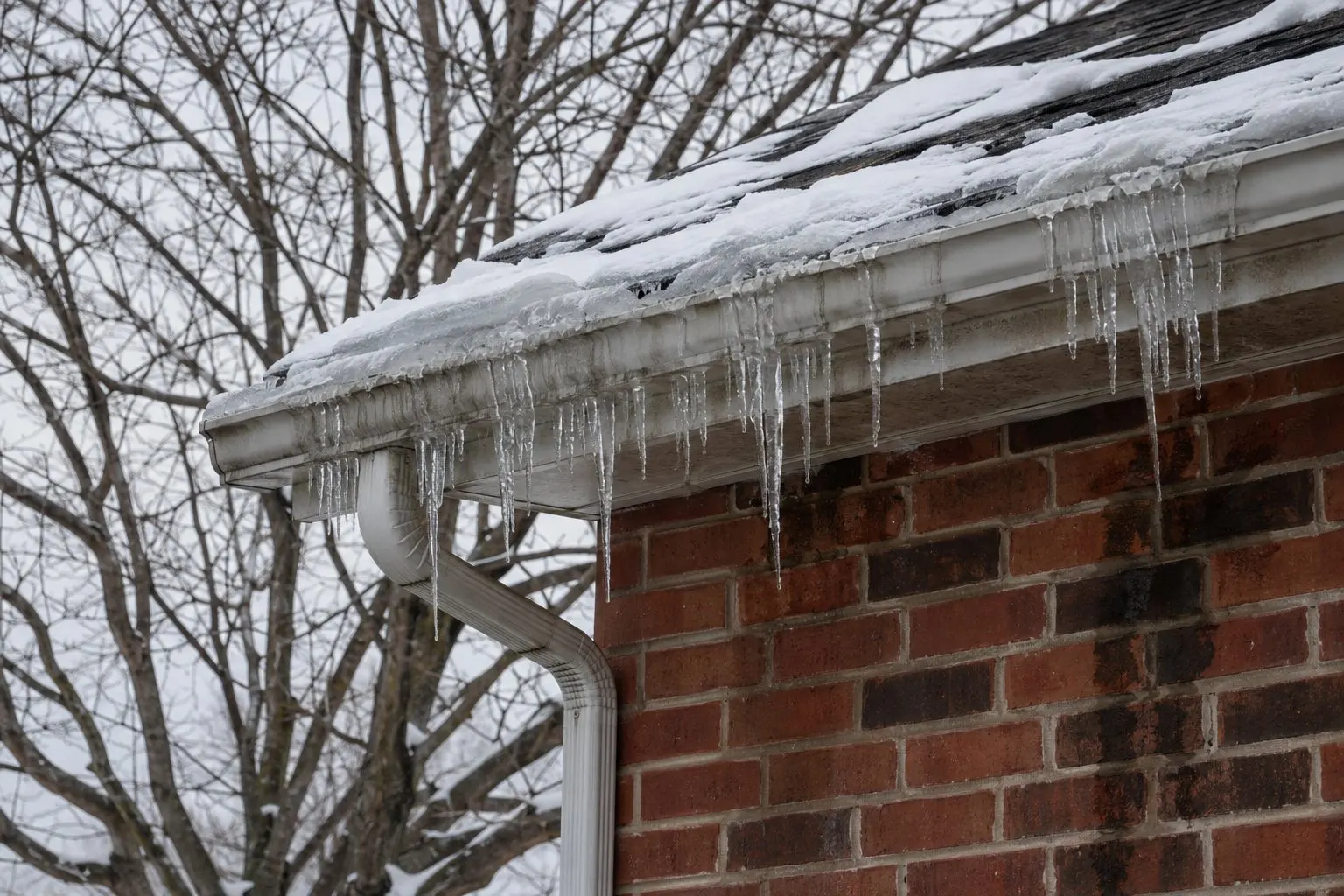
- About 65 days a year cross the freezing line, according to federal normals.
- Clear gutters before the first hard freezes.
- Ice dams start with heat in the attic, not in the gutter.
- Don't chip ice off a gutter. You'll damage the metal or the roof.
The numbers
| Measure | Normal |
|---|---|
| Days with low at or below 32°F | 84.8 |
| Days with high at or below 32°F | 19.3 |
| Snowfall | 16.6 inches a year |
| January average high and low | 40.4°F and 23.8°F |
| Days with an inch of snow or more | 5.1 |
The January averages tell the story. A typical day goes from well below freezing to well above it. With only about five one-inch snowfalls a year, St. Louis isn't snow country, but its winters are constantly crossing that line. (NOAA normals)
What freeze and thaw does to a gutter
- Water in a joint freezes and pries it open. Next thaw, it leaks.
- A flat or sagging run holds water, adding ice weight to every hanger.
- Plugged outlets back melt up, over the lip or behind the gutter.
- Icicles add weight at the front edge and can pull the run forward.
- Wet brick below takes its own freeze-thaw damage.
How ice dams form
Warm air leaking into the attic warms the roof deck. Snow melts on the warm part of the roof and runs down to the cold eave, where it refreezes. The ridge of ice holds back more melt, which can back up under shingles and into the house. The gutter often gets blamed, because that's where you see the ice. Older houses with little attic insulation and complicated roofs are prone to this.
What helps
- Seal attic air leaks and add insulation where it's lacking.
- Check ventilation at the soffit and ridge.
- Clean gutters before freezing weather, so melt has a way out.
- Keep the fall right, and add outlets where runs are long.
- When re-roofing, ask about an ice and water membrane at the eave.
What doesn't
- Chipping ice with a hammer or a shovel.
- Salt in the gutter, which is hard on metal and on anything below.
- Expecting gutter guards to stop it. They don't.
Heat cables can help at known problem spots, but they treat the symptom and use power. Ask an electrician, and follow the maker's instructions.
Walks and steps
A downspout that empties across a walk makes a sheet of ice on a cold night. Take a look at your discharge points on the first freezing morning and move them if needed.
Questions
Should gutters be removed in winter?
No. They still carry away plenty of melt and winter rain. Keep them clean and well fixed instead.
Do I have an ice dam or just icicles?
Icicles alone aren't proof. Look for a thick ridge of ice along the eave and water stains inside on the top floor. If you see those, have the attic looked at.
Will a 6-inch gutter help with ice?
It won't stop ice forming, though it does give more room and bigger outlets. Attic heat loss is the main factor. Fall and clean outlets come next.
What should I do with a heavy gutter full of ice?
Stay off the ladder if it's icy, and keep people out from underneath. Let it thaw, then check hangers and joints. If it's pulling away, call someone once conditions are safe.
Sources
Related
- Gutter Repair
- Gutter Installation
- Fascia & Soffit Repair
- How to check a gutter contractor in Missouri
- Gutters on old St. Louis brick homes
- What do new gutters cost in St. Louis, and how do you read a quote?
General information for St. Louis-area homeowners. Not a quote, and not engineering, legal or insurance advice.